News
When should you replace your filter element?

A water filter works by holding things back. By definition, that means things stay behind in it. At some point there is no more room, and then something happens that many people do not expect: the filter does not stop working, it starts working less well. Without you noticing.
That is exactly why replacing it on time matters.
Why one year is the rule of thumb
Each layer has its own saturation point. The pre-filters — PP cotton and activated carbon — fill up first, because they do the coarse work. The RO membrane itself lasts longer, precisely because those pre-filters shield it.
One year is the practical middle ground: long enough that you are not constantly dealing with it, short enough that you never get into the zone where filtration noticeably declines.
Three things that shorten that period:
Hard water. The more dissolved limescale and minerals in your tap water, the faster your membrane is loaded. In parts of the Netherlands with hard water, you are at the upper end of the load.
Heavy use. A household of five uses more than someone living alone. The rule of thumb assumes average use.
Long periods of standstill. A filter that is not used for weeks has not been “saved”. Standing water in a filter is less favourable than flowing water.
How you notice it
Usually you don’t — and that is the point. The change is so gradual that you do not taste it.
Still, there are signs:
- The taste changes. Often subtly. If someone who does not drink at your home every day comments on it, that is a more reliable sign than your own perception.
- The flow decreases. A pre-filter that is filling up creates more resistance. It takes longer for your glass to fill.
- The TDS value rises. If you have a TDS meter: measure the filtered water every few months and write it down. A rising trend is the clearest sign there is.
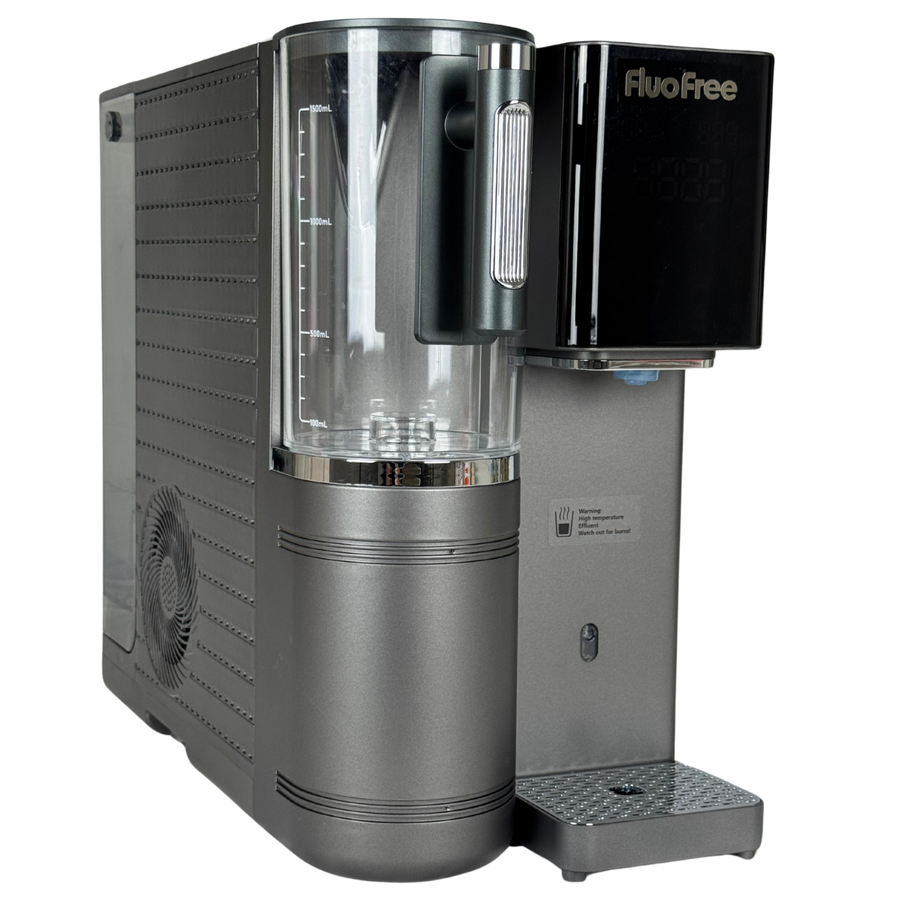
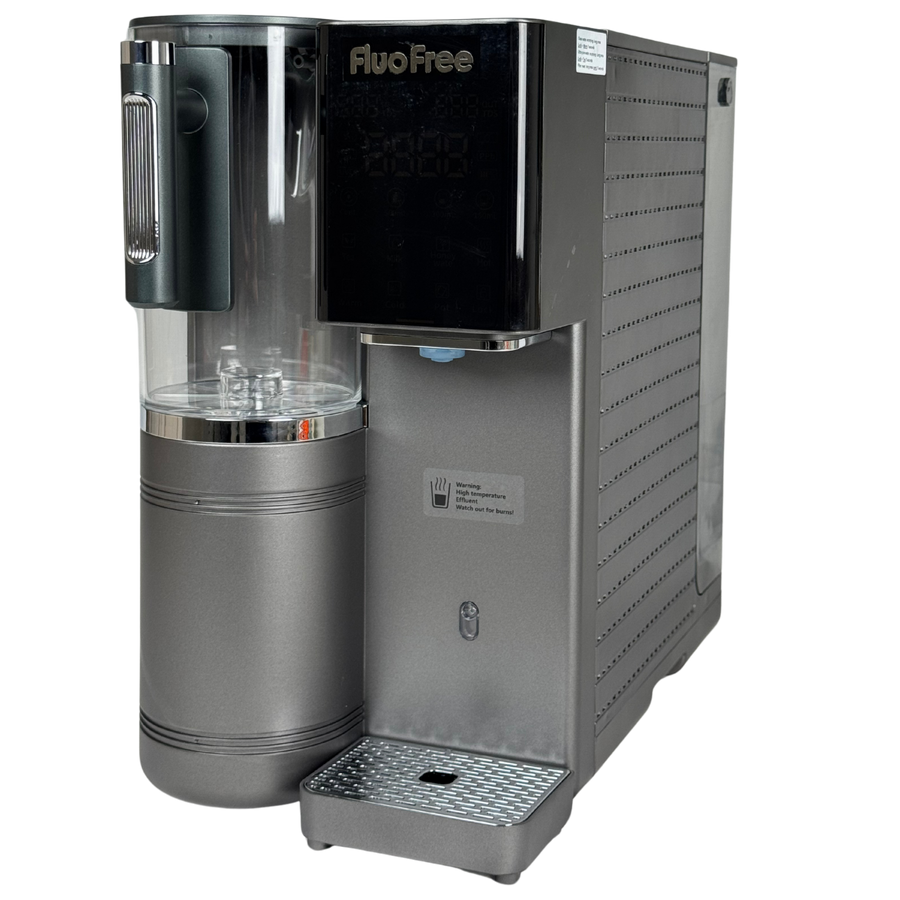
- The counter on the appliance. The Osmora keeps track of how much has been filtered.
Replacing it yourself
The filter set is at the front, behind the panel. You do not have to disconnect anything from the water supply, take anything apart or use any tools.
- Switch the appliance off and unplug it.
- Open the front panel.
- Turn the old element a quarter turn and pull it towards you.
- Insert the new element and turn it until it clicks.
- Close the panel, plug it back in and let the first reservoir run through.
That last step is sometimes skipped. Do it anyway: a new filter contains production residues that are flushed out with the first litres.
Which set you need
The Osmora Premium and the Osmora Standaard use different sets.
Osmora Premium
5-in-1 filter set. All five layers in one element, so one action.
Osmora Standaard
Separate RO, PAC and C2 filters.
Not sure which model you have? Look at the back of the appliance, or send us the serial number.
What it costs not to do it
A filter set costs about the same as a month and a half of bottled water for a family. That is the comparison that counts.
What you lose if you wait too long is not immediately visible, and therefore easy to ignore. Set a reminder in your calendar on the day you fitted the previous set. That is the cheapest solution there is.
View the filter sets or read how reverse osmosis works.