


News
PFAS in drinking water: which EU standards apply since 12 January 2026?

PFAS is a collective name for thousands of man-made substances that barely break down in the environment. Since the European Drinking Water Directive (EU) 2020/2184, they have been explicitly on the map as an emerging contaminant in drinking water.
What the directive does
The directive moves away from measuring only at the tap and prescribes a risk-based approach across the entire chain: from the catchment area, through water treatment, to the pipes in buildings. The European Commission explicitly names PFAS and microplastics as substances to be detected and limited before they enter the supply.
For PFAS, the directive has two types of parameters: one for the sum of a selected group of PFAS substances, and one for PFAS in total. These are listed with their values in Annex I of the directive.
Why we are not writing down a number here
We were unable to consult the source text of Annex I while writing this article. Copying a limit value from memory is exactly the kind of figure that takes on a life of its own — so we are leaving it out and referring to the source itself. If you want the exact parameter values, read Annex I of Directive (EU) 2020/2184.
What this means for you
A standard says something about the maximum a drinking water company may supply, not about what comes out of your tap today. You can find the latter in the measurement data published by your own drinking water company, usually per supply area.
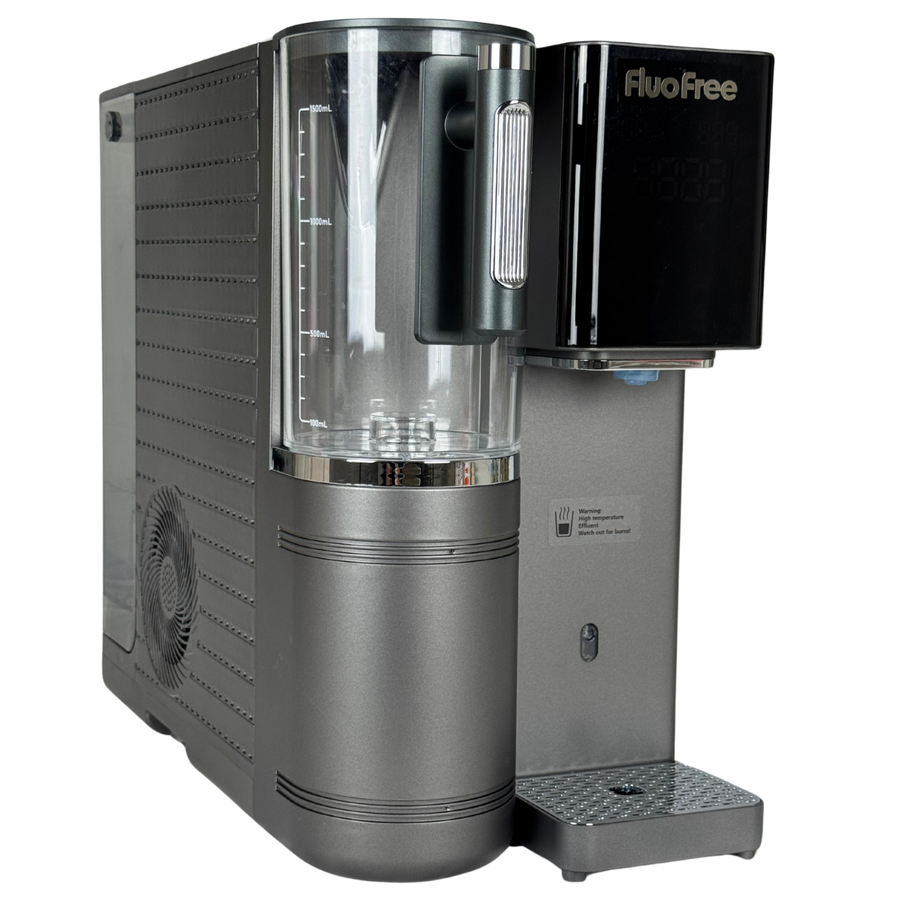
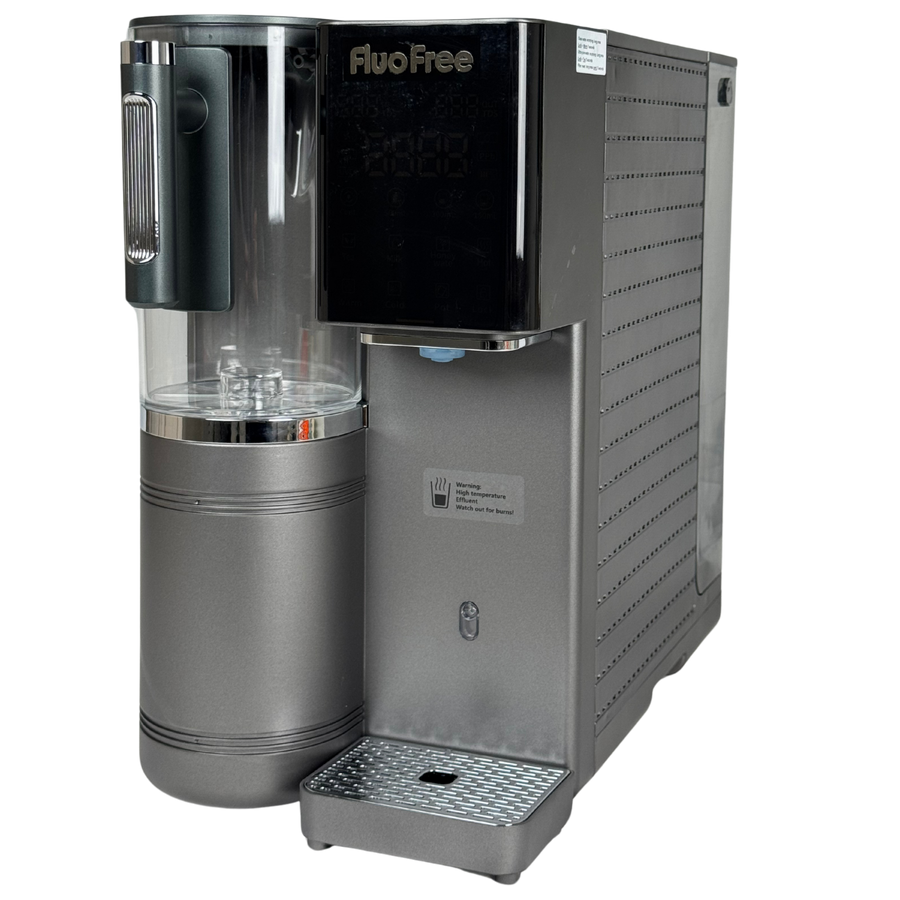
And about filters: we do not claim that our appliances take PFAS out of your water. What each filter step does, and what it is aimed at, is described on the product page — with the caveat that an independent, model-specific report per substance does not yet exist.
Sources
- European Commission — Drinking water
- Directive (EU) 2020/2184 on the quality of water intended for human consumption, Annex I
Continue reading

Veelgestelde vragen
What does the European Drinking Water Directive lay down about PFAS?
Directive (EU) 2020/2184 explicitly names PFAS as an emerging contaminant and requires member states to carry out risk-based measuring across the entire chain, from source to tap.
Why do you not state a limit value in µg/l?
Because we only want to state that value if we have been able to check it in the source text at the time of writing. Annex I of the directive is where the parameter values are listed.
Does a standard mean that my tap water contains PFAS?
No. A standard is an upper limit that drinking water companies must comply with. What is in your tap water is shown in the measurement data of your own drinking water company.
Does a water filter take PFAS out of my water?
We make no statement about that without an independent, model-specific measurement report. What the filter steps of our appliances do is described on the product page.