


of Dutch tap water contains traces of PFAS
Based on the Dutch measurements from 2023 cited here.
RIVM · view the sourceYou haven't added anything yet. Browse our water filters and find the model that suits you.
Continue shoppingVoor 15:00 besteld, morgen in huis
Maak je bestelling compleet
€14,99
Background
Tap water meets the legal standards. Even so, more and more households put a filter behind it. This article walks through what the measurements show, what reverse osmosis does, and what a litre then costs.

Water utilities measure the legal parameters. What falls outside them comes from research — and that research finds traces.
Tap water comes from groundwater and surface water. Both are in contact with farming, industry and sewers. Water utilities take a great deal out, and what comes from the tap meets the standard the law sets.
That standard does not cover everything. For some of the substances researchers find, no drinking water limit exists yet. They are in the reports all the same.
What follows is measurements, not a verdict on what a substance does. Every figure has a source; they are collected on the sources page.
Based on the Dutch measurements from 2023 cited here.
RIVM · view the sourceThe study cited maps out substances in Dutch drinking water sources.
KWR · view the sourceAn international review; results vary by region and research method.
WHO · Microplastics in drinking-water (2019) See the full source listA carbon filter tackles taste and smell. Reverse osmosis works on a different scale.
In reverse osmosis, water is pushed under pressure past a membrane that works at 0.0001 micron. Dissolved substances stay on one side, your drinking water comes out on the other. It is the same technique used to make drinking water on board ships.
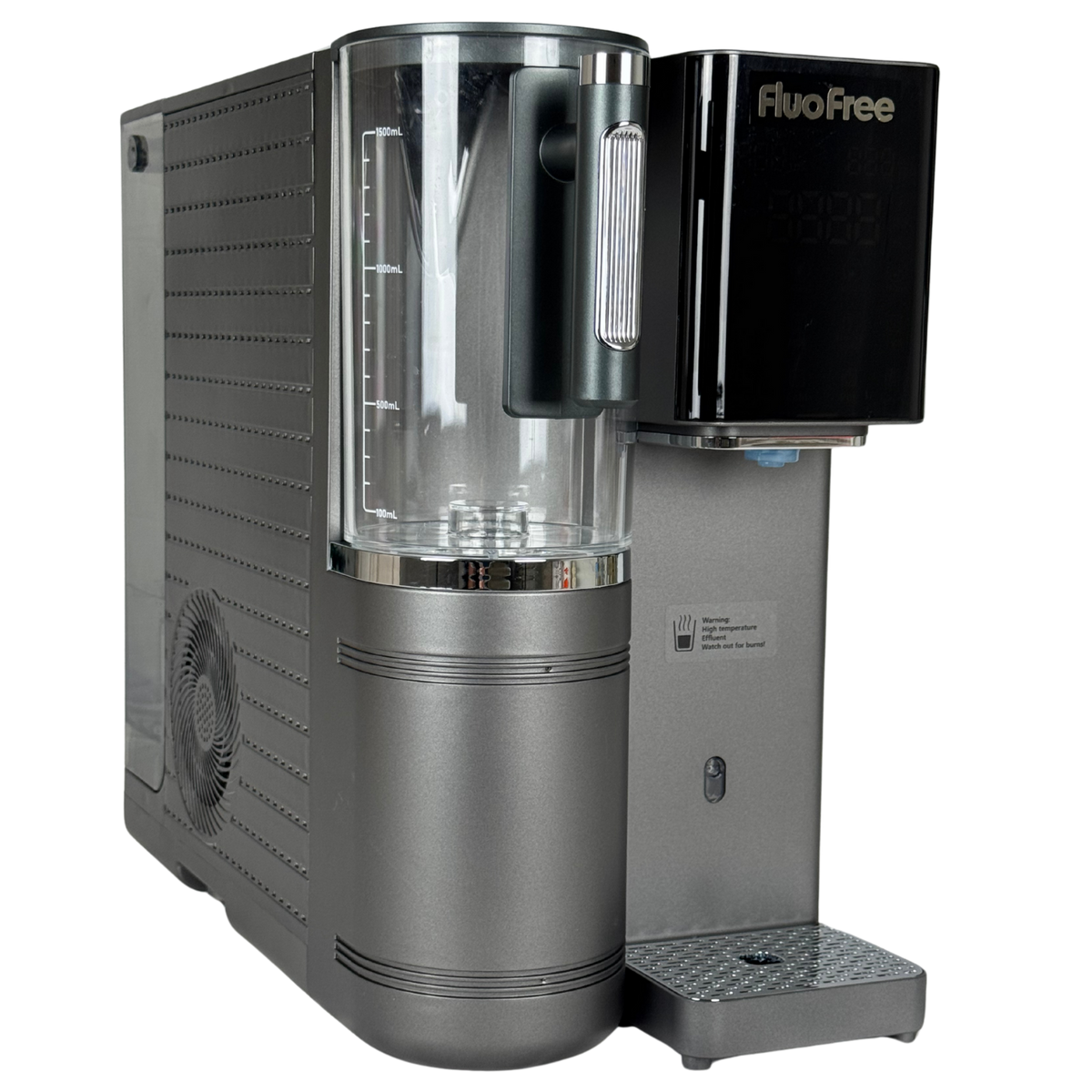
Reverse osmosis leaves the water bare. That is why the Osmora follows the membrane with a remineralisation step that brings calcium and magnesium back. That is what you taste.
The membrane works at 0.0001 micron. Dissolved substances stay on one side, your drinking water comes out on the other. Osmora Premium filter specification
Dutch water technology, with components tested by NSF.
NSF tested the RO membrane (NSF/ANSI 58) and the carbon block (NSF/ANSI 42) for material safety. Both passed. This is a component listing covering those two parts.
Remineralisation and hydrogen enrichment sit in the same device. There is nothing to buy on top and nothing to connect that is not already inside.
4,5 van de 5 sterren Trustpilot
Independent experiences about taste, convenience and everyday use.
Per litre, made up of the filter set and the electricity it uses. No lugging bottles, no deposits.
Filter set €99,00 / 2000 L
Electricity per litre €0,09
Per litre €0,14
Electricity is our own assumption of €0.09 per litre, not a measured figure; it matches the default budget of €100 a year in the calculator below. The filter price comes straight from the shop.
1,5 litres per person per day
With 2 people together 3 litres a day.
Brand-name bottles per year €821,25
FluoFree per year €199,00
Cost in the first year €277
From year 2 you save €622
1095 L per year · 1 filter set(s) at 99.0 included.
| Feature | Standaard €397,00 | Premium €899,00Most chosen | Pro €2.497,00 |
|---|---|---|---|
| Reverse osmosis | yes | yes | yes |
| Hydrogen enrichment | no | yes | yes |
| Mineralisation after filtration | no | yes | no |
| Cold and hot from one device | no | yes | yes |
| No installation needed | no | yes | no |
| Temperature settings | 5 settings up to 95 °C | 6 settings, 5–95 °C | 2 settings: cold and hot |
| Placement | On the worktop | On the worktop | Floor-standing model |
| Aimed at businesses | no | no | yes |
Per model, based on its own product information. If a property is not stated there, we show a dash.
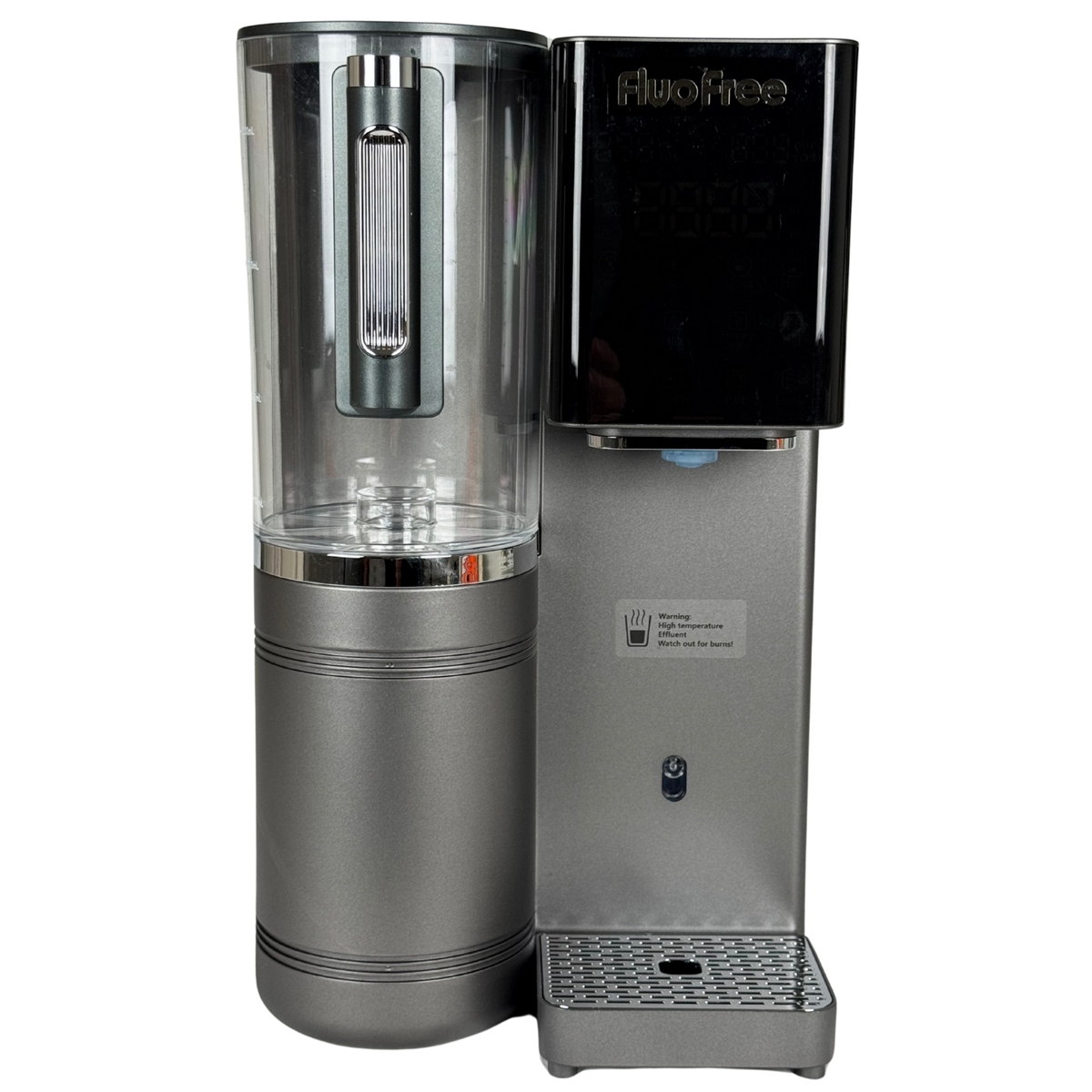
The Osmora Premium is on your counter within ten minutes. No drilling; connecting it to the tap is enough.