News
Reverse osmosis without stripped water: how remineralisation works in the Osmora Premium

Read up on reverse osmosis and you'll hear two things. It's the most thorough filtration you can put on your kitchen counter. And the water that comes out is stripped. Both are true. The Osmora Premium is built to solve the second without giving up on the first.
The downside of reverse osmosis: stripped water
A reverse osmosis membrane works at 0.0001 micron. Water passes through; dissolved substances stay behind. The membrane doesn't discriminate: calcium and magnesium are dissolved substances too, so they end up on the other side of the membrane just the same.
The result is water with very few dissolved minerals. And you can taste it. Many people describe osmosis water as flat or empty: clean, but lacking character.
So people often fix it themselves: a splash of tap water, mineral drops in the jug, or back to bottles of mineral water. It works, but it's a faff. And that faff is exactly what you wanted to get away from with a filter.
What remineralisation is
Remineralisation is an extra stage after the membrane. In the Osmora Premium, it's the final layer of the filter set: the filtered water flows through it and picks up calcium and magnesium along the way. It happens automatically, with every glass you pour. No measuring, no drops to add, no jug to mix.
The order is deliberate. First the membrane does its job, and only then do the minerals go back in. So whatever the membrane has held back stays out. Calcium and magnesium, on the other hand, do go back in.
What you'll notice
Mainly flavour. Water with calcium and magnesium tastes fuller and rounder than stripped osmosis water. You'll notice it in the first sip: not flat, but fresh and full.
The difference stands out most when you taste them side by side: a glass of stripped osmosis water and a glass from the Premium. The first is clean but empty. The second tastes like the water you know, only thoroughly filtered.
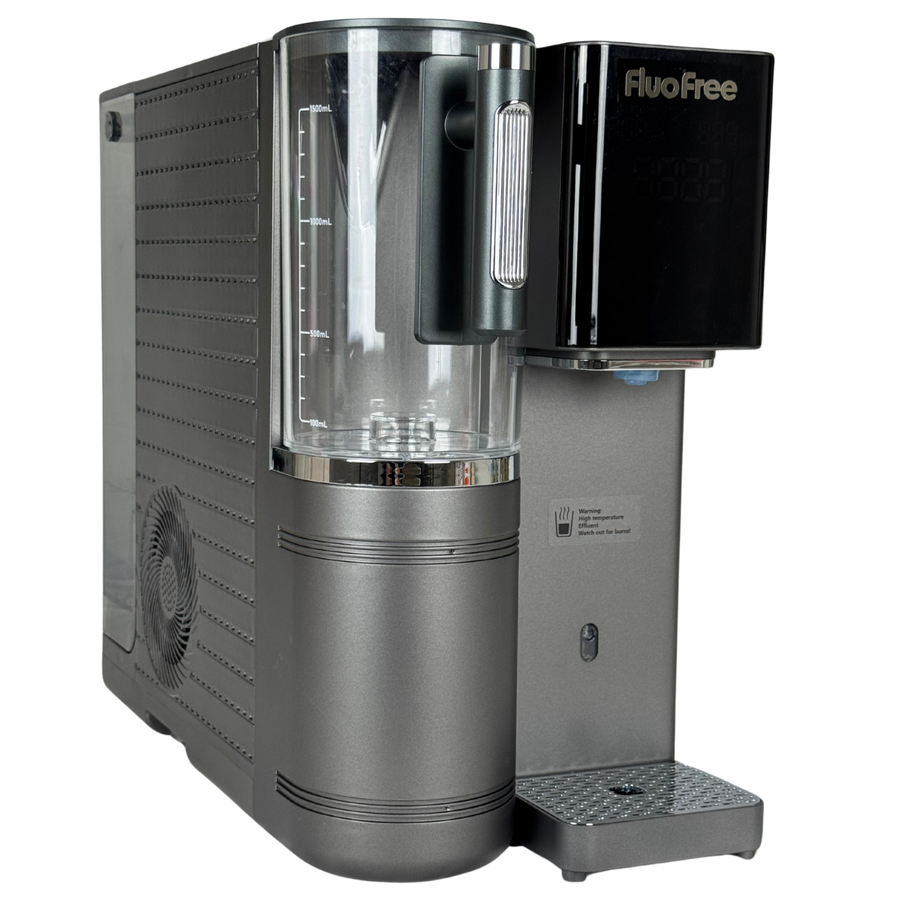
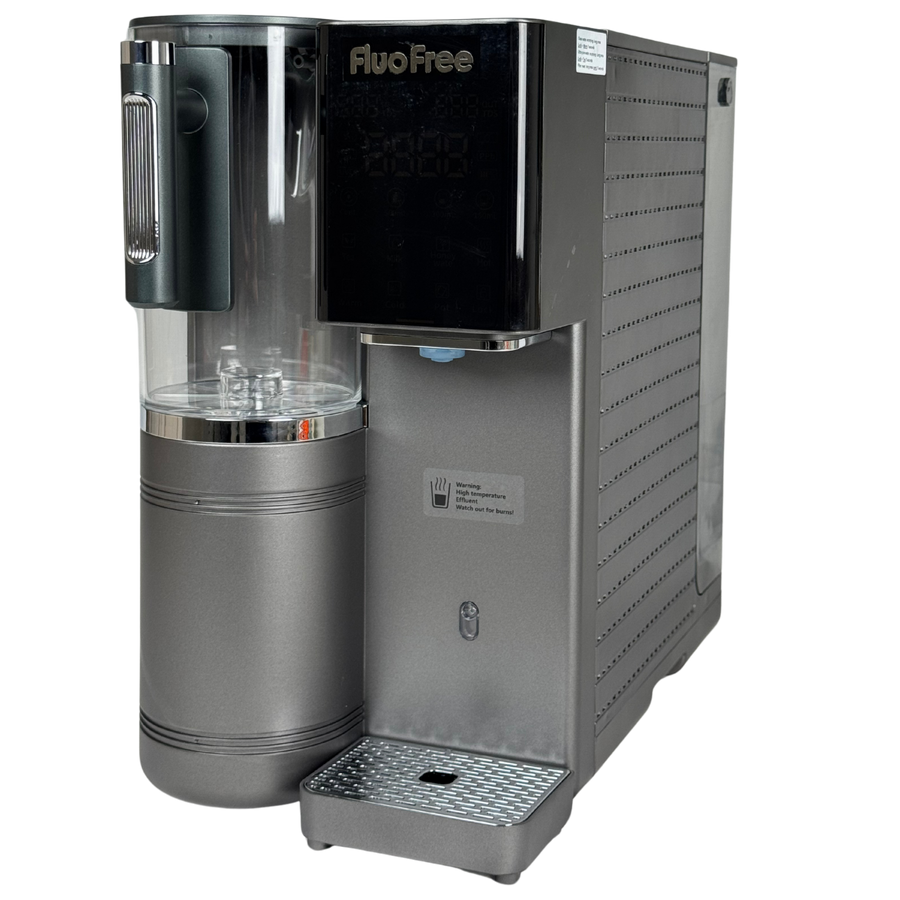
And because the Premium dispenses cold, warm and hot water, from 10 to 95 °C, you have that remineralised water on hand for everything: a cold glass with dinner, hot water for tea, without a kettle and without bottles.
What we deliberately don't claim
We don't state an amount of calcium and magnesium per litre. That figure isn't in the manufacturer's product information, and we won't write down a number that hasn't been measured. Nor do we promise any physical effect. Remineralisation here is about flavour, and about bringing back what the membrane has held back.
Want to know where you mainly get your minerals from? Read our article osmosis water and minerals: what's the story? We'd rather tell you an honest story that holds up than give you a big number you can't check.
Maintenance: it's simply part of the filter set
The remineralisation layer is part of the filter set. You replace everything in one go, after 12 months at most or around 750 litres, whichever comes first. Don't wait for the taste to change: follow the unit's filter alert and the manual. Change it once a year, and there's nothing else you need to do. You can order a new filter set separately in our shop.
Thoroughly filtered and full of flavour, in one unit
With the Osmora Premium, you don't have to choose between thoroughly filtered water and water with flavour. Reverse osmosis does the filtering, remineralisation brings back calcium and magnesium, and then the unit adds hydrogen as well. Three stages, one unit on your counter, no drilling or built-in installation.
Read also: how does reverse osmosis work? and hydrogen water without a separate device.